Lith Corporation, founded in 1998 by a group of material science doctor from Tsinghua University, has now become the leading manufacturer of battery lab&production equipment. Lith Corporation have production factories in shenzhen and xiamen of China.This allows for the possibility of providing high quality and low-cost precision machines for lab&production equipment,including: roller press, film coater,mixer, high-temperature furnace, glove box,and complete set of equipment for research of rechargeable battery materials. Simple to operate, low cost and commitment to our customers is our priority.
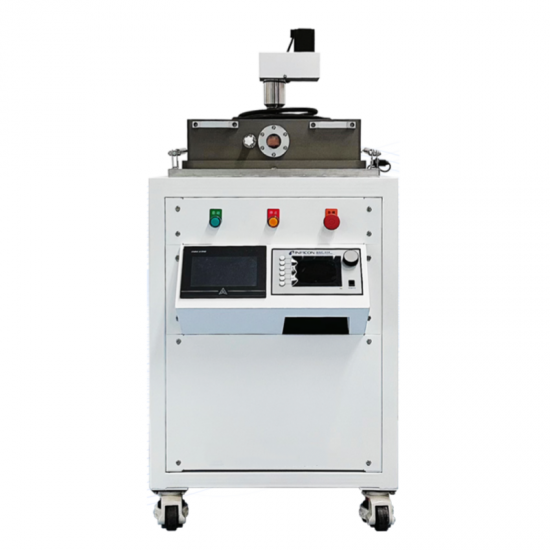
Overview A thin film evaporator (TFE) is a highly specialized piece of equipment designed for the efficient evaporation and concentration of heat-sensitive liquids. By creating a thin, continuously renewed film of liquid on a heated surface, it enables rapid mass and heat transfer while minimizing thermal degradation. Thin film evaporators are widely used in chemical, pharmaceutical, food, and petrochemical industries due to their ability to handle viscous, high-boiling, or thermally unstable materials. The compact design, low residence time, and excellent heat transfer efficiency make TFEs an essential tool for modern industrial processing.
Features Modern thin film evaporators are engineered with several advanced features to ensure performance, safety, and operational flexibility:
1. Vertical or Horizontal Design: TFEs can be designed vertically for smaller footprints or horizontally for high-capacity processing. 2. Rotating Wiper System: A mechanical wiper spreads the feed into a thin film along the heated surface, enhancing heat transfer and preventing fouling. 3. Precise Temperature Control: Equipped with advanced temperature sensors and controllers to maintain optimal heating conditions for sensitive products. 4. Vacuum Capability: Reduces boiling points, allowing evaporation at lower temperatures to preserve product quality. 5. Corrosion-Resistant Materials: Stainless steel or specialized alloys protect against chemical attack from aggressive or acidic liquids. 6. Modular and Customizable: Designs can be adapted to suit specific process requirements, including multi-effect or wiped-film configurations.
Process The operation of a thin film evaporator begins with feeding the liquid into the evaporator’s heated surface. The rotating wipers continuously spread the liquid into a thin, uniform film, increasing the surface area and promoting efficient heat transfer. Under controlled heating and vacuum conditions, the solvent or volatile component evaporates rapidly, while the concentrated residue moves down the evaporator for collection. The vapor is then condensed using a condenser system and collected separately. Thin film evaporators can operate in either single-stage or multi-stage modes, depending on the desired level of concentration or separation. The low residence time and uniform heating make TFEs particularly suitable for thermally sensitive products, reducing degradation and ensuring product integrity.
Applications Thin film evaporators are applied across a wide range of industries:
* Chemical Industry: Concentration of reactive or high-boiling-point chemicals, solvent recovery, and purification of fine chemicals. * Pharmaceutical Industry: Processing of active pharmaceutical ingredients (APIs), extraction of bioactive compounds, and solvent removal. * Food and Beverage Industry: Concentration of fruit juices, dairy products, and flavor extracts while preserving nutritional and sensory qualities. * Petrochemical Industry: Refining heavy oils, bitumen concentration, and removal of volatile components from viscous hydrocarbons. * Environmental Applications: Treatment of industrial wastewater and recovery of valuable solvents or organic compounds.
Advantages Thin film evaporators provide numerous advantages compared to conventional evaporation systems:
1. High Heat Transfer Efficiency: Thin film formation ensures maximum contact with the heated surface, accelerating evaporation. 2. Low Thermal Degradation: Minimal residence time and vacuum operation protect heat-sensitive compounds. 3. Handling of Viscous Fluids: TFEs can process highly viscous or sticky materials that are difficult to evaporate using conventional methods. 4. Compact and Space-Saving: Compared to traditional evaporators, TFEs require smaller footprints for similar processing capacities. 5. Flexible Operation: Easily adaptable to various feed compositions, temperatures, and vacuum conditions. 6. Reduced Fouling and Maintenance: Wiping mechanism prevents build-up on heating surfaces, minimizing downtime.
Conclusion The thin film evaporator represents a cornerstone technology in modern thermal separation processes. Its ability to efficiently evaporate and concentrate heat-sensitive, viscous, or high-boiling liquids makes it indispensable in chemical, pharmaceutical, food, and petrochemical industries. With features such as precise temperature control, vacuum operation, and a rotating wiper system, TFEs provide superior product quality, operational efficiency, and reliability. By combining high heat transfer efficiency with low thermal stress, thin film evaporators enable industries to optimize production, reduce energy consumption, and achieve consistent product performance. As technology advances, TFEs continue to evolve, offering greater automation, scalability, and process flexibility, solidifying their role as a key instrument in industrial processing.


 +86 13174506016
 Louis@lithmachine.com
 +86 18559646958
 18659217588
 English ▼


